Loading...

List of Issues

    Chinese Journal of Catalysis
    2026, Vol. 90
    Online: 18 November 2026

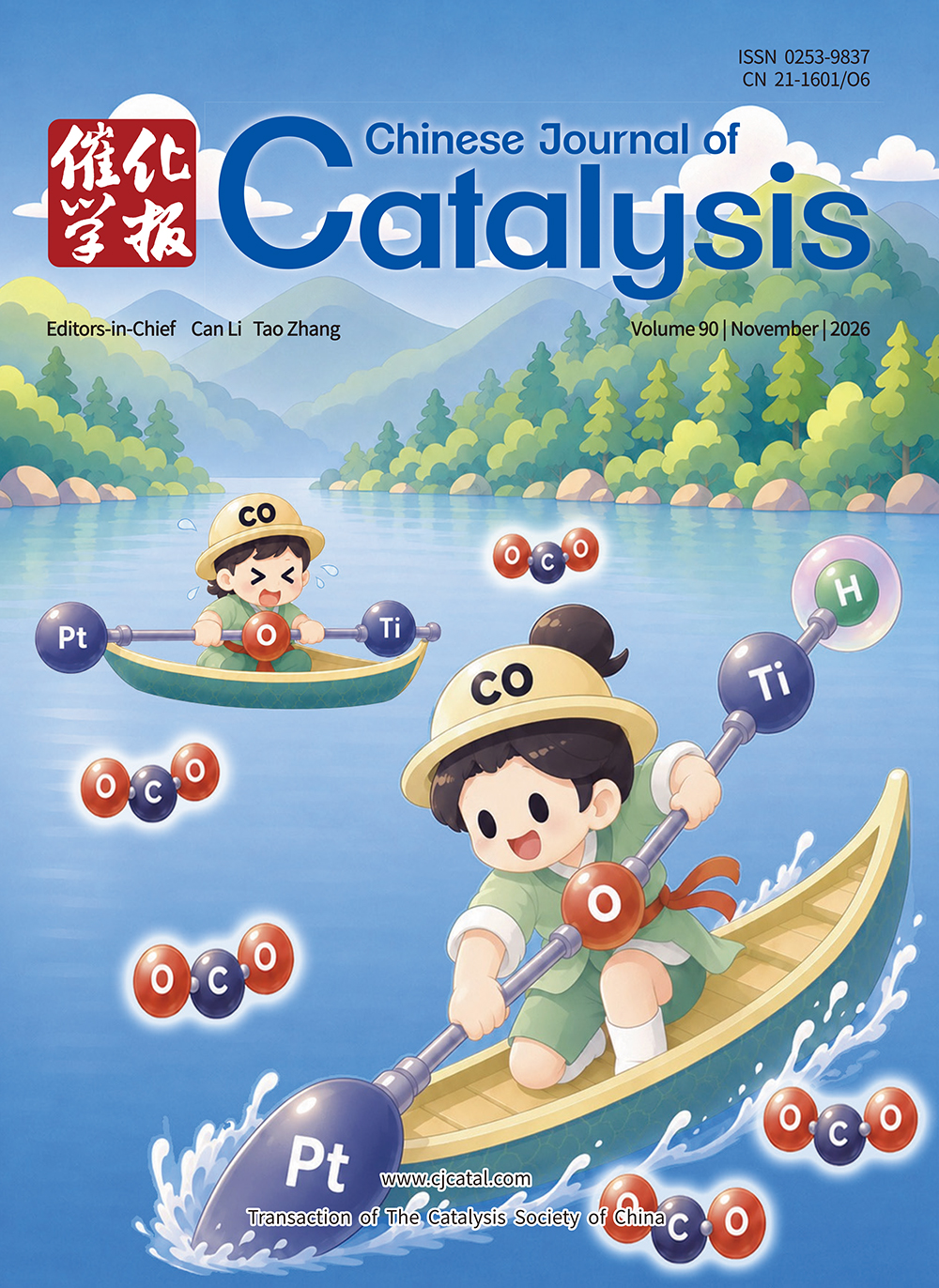
    Cover: Profs. Fabing Su, Shuang Deng, Yongjun Ji, Wenxing Chen, Ziyi Zhong, and coworkers, in their article on pages 117–129, systematically investigated the hydrogen-induced interfacial reconstruction in the Pt/TiO2 catalyst on CO oxidation and elucidated the underlying mechanism of the restructuring at the metal–support interface. This study demonstrates that the unique Ptσ+–O–Ti4+–(H–OV) interfacial configuration not only facilitates the adsorption and activation of CO but also separately enhances the activation and migration of interfacially adsorbed oxygen and lattice oxygen. This reconstructed interface enables the synergistic coupling of the Langmuir–Hinshelwood and Mars–van Krevelen pathways. Consequently, the Pt/TiO2-100%H2 catalyst featuring this interfacial structure exhibits markedly enhanced low-temperature CO oxidation activity. This work advances the conventional oxygen-vacancy-centered understanding of metal–support interactions and offers new guidance for designing efficient low-temperature CO oxidation catalysts.
    For Selected: Toggle Thumbnails
    Reviews
    Innovative strategies in noble and earth abundant metal single-atom-based photocatalysts for hydrogen production
    Ikram Ullah, Risheng Duan, Muhammad Amin, Waqar Ahmad Qureshi, An-Wu Xu, Pei Zhao, Ning Qin
    2026, 90:  1-26.  DOI: 10.1016/S1872-2067(26)65191-1
    Abstract ( 38 )   HTML ( 2 )   PDF (5850KB) ( 14 )  

    This review presents a comprehensive overview of noble (Pt, Pd, Ag, Au, Ru, and Rh) and earth abundant metals (Co, Cu, Ni, Fe, and Mo) single-atom-based photocatalysts (SACs) for hydrogen (H2) production. We first highlight the fundamental of SACs followed by rational design strategies to achieve atomic-level distribution, and increase the density of active sites. Then, thoroughly summarize the enhanced H2 production activity of noble and earth abundant metal-based SACs. Moreover, insights into the charge transfer mechanisms, such as charge separation, transfer, and spatially defined electron delocalization to unravel the structure-activity relationship and coordination-dependent catalytic performance. Finally, we discuss recent challenges and prospects for designing highly effective SACs. Overall, this review provides a valuable guidance by highlighting fundamental principles of SACs, performance assessment, and mechanistic insights toward practical solar-to-H2 conversion.

    Proton hydrogenation reaction in neutral media: Mechanisms, challenges, and performance enhancement strategies
    Jiaxuan Zhou, Yaodong Yu, Jiani Han, Yanxue Chao, Jianping Lai, Lei Wang
    2026, 90:  27-51.  DOI: 10.1016/S1872-2067(26)65188-1
    Abstract ( 19 )   HTML ( 2 )   PDF (5828KB) ( 3 )  

    Proton hydrogenation reactions underpin numerous core processes in energy conversion, chemical production, and environmental remediation. While traditional acidic environments provide ample proton sources, they pose challenges such as equipment corrosion and environmental pollution. Neutral environments effectively mitigate these issues and offer broader application compatibility. However, their extremely low proton concentrations lead to challenges including slow proton supply kinetics, intensified competitive hydrogen evolution reactions, limited mass transfer of reactants, and destabilization of the interfacial microenvironment. This review systematically analyzes the reaction mechanisms and key challenges of proton hydrogenation in neutral environments. It summarizes cutting-edge strategies for performance enhancement across three dimensions: Intrinsic catalyst structure design, enhanced interfacial proton transfer, and optimization of reaction pathways and mass transport processes. Finally, it outlines future research directions including in situ mechanism studies, catalyst stability enhancement, and system energy efficiency optimization, aiming to provide theoretical guidance for constructing efficient and stable proton hydrogenation catalytic systems in neutral environments.

    Multiscale optimization design of porphyrin electrocatalysts for redox reactions under operational conditions
    Mingyi Zhao, Zhengyang Liu, Cong Yang, Zhaodi He, Yujun Guo, Rui Cai, Xiangqian Yin, Jianwei Wang, Xueqin Mu, Suli Liu, Dingsheng Wang, Zhihui Dai
    2026, 90:  52-81.  DOI: 10.1016/S1872-2067(26)65171-6
    Abstract ( 24 )   HTML ( 1 )   PDF (5595KB) ( 1 )  

    Porphyrin electrocatalysts possess significant advantages, including adjustable structure, high selectivity, and excellent stability, and are widely applied in redox reactions. However, under actual operating conditions, porphyrin catalysts are prone to structural rearrangement and loss of active sites, resulting in decreased activity and stability, and making it difficult to meet the requirements of industrial applications. Based on the current status of porphyrin catalysts from theoretical research to industrial application, this review aims to clarify the design and application strategies of them under actual operating conditions. Firstly, we provide an overview of the classification system of porphyrin catalysts. Secondly, we delve into the challenges faced by porphyrin catalysts in industrial environments. Subsequently, we propose optimization strategies for porphyrin electrocatalysts at the atomic scale (strongly coupled carrier and spatial confinement) and the molecular scale (regulation of large ring conjugation, strengthening metal-ligand bonds and mass transfer channels), and cover their practical applications. Finally, we focus on integrated electrodes suitable for industrial implementation. We systematically summarize the main challenges and solutions faced by porphyrin electrocatalysts under actual working conditions, and outline the future development directions.

    Advancing metal cluster-based electrocatalysis for C-N synthesis: Fundamental, design strategies, and applications
    Irshad Ahmad, Shasha Wang, Mohammed Qasem Alfaifi, Yousef I. Alrashed, Fahad M. Albaqi, Gao Li
    2026, 90:  82-116.  DOI: 10.1016/S1872-2067(26)65185-6
    Abstract ( 25 )   HTML ( 1 )   PDF (11204KB) ( 6 )  

    The escalating demand for sustainable nitrogen-containing chemicals calls for transformative electrocatalytic strategies that can precisely orchestrate C-N bond formation. Atomically defined metal nanoclusters have emerged as a frontier in electrocatalysis, enabling the direct synthesis of chemicals via C-N coupling. Their discrete electronic structures and tunable ligand environments permit atomic-level control over adsorption, activation, and proton-electron transfer dynamics, overcoming the intrinsic kinetic and thermodynamic challenges of multi-electron C-N coupling reactions. Here, we present a comprehensive overview of cluster-based electrocatalysts, encompassing cluster properties, synthetic routes, mechanistic insights, performance descriptors critical for evaluating catalytic efficiency, and their applications in the synthesis of urea, ammonia, amines, amides, oximes, and amino acids. We focus on the correlations between cluster composition, size, and local coordination in dictating product distribution and catalytic durability. Finally, we identify current bottlenecks in stability, scalability, and industrial integration, and propose rational design principles for engineering next-generation clusters to achieve sustainable, high-value nitrogen chemical production. This review frames a roadmap for exploiting atomic precision in electrocatalysis, charting a path toward transformative C-N bond-forming technologies.

    Articles
    Hydrogen-induced Ptσ+-O-Ti4+-(H-oxygen vacancy) interfacial sites in Pt/TiO2 for enhanced low-temperature CO oxidation
    Junbo Tian, Peng Zheng, Shuang Deng, Yongjun Ji, Tengfei Zhang, Zhiyi Sun, Wenxing Chen, Yi-Chi Wang, Lin Gu, Dong Su, Guangwen Xu, Ziyi Zhong, Fabing Su
    2026, 90:  117-129.  DOI: 10.1016/S1872-2067(26)65204-7
    Abstract ( 41 )   HTML ( 1 )   PDF (10907KB) ( 3 )  
    Supporting Information

    Understanding reconstructed interfacial sites is crucial for enhancing the catalytic conversion efficiency, as these sites can facilitate reactant adsorption, transformation, and desorption. Herein, we report an unconventional interfacial structure of Ptσ+-O-Ti4+-Hδ+-oxygen vacancy (OV), in which atomic hydrogen binds to Ti4+ sites via a charge-compensation mechanism involving subsurface OVs. This restructuring induced by hydrogen creates electron-rich Pt centers and interfacial oxygen, resulting in spatial elongation of the Pt-O and O-Ti bonds. This Ptσ+-O site, stabilized by -Ti4+-(H-OV), promotes the activation of CO adsorption/interfacially absorbed oxygen and interfacial lattice oxygen, effectively coupling the Langmuir-Hinshelwood and Mars-van Krevelen pathways. These sites facilitate the rapid CO2 formation and desorption. Consequently, this system achieves complete CO conversion at 120 °C with an ultralow Pt loading of 0.17 wt% (even in the presence of 0.005% SO2 and 10% vol H2O) and a 59-fold increase in turnover frequency compared to the control sample lacking this interfacial structure.

    Boron-incorporation-mediated interfacial water orientation for boosting CO2 electroreduction to CH4
    Yue Shen, Bing Chen, Jielian Yang, Qi Wu, Yuemei Liao, Liya Zhou, Naixin Lyu, Jin Guo, Xuetang Xu, Anxiang Guan, Zaiwang Zhao
    2026, 90:  130-144.  DOI: 10.1016/S1872-2067(26)65192-3
    Abstract ( 92 )   HTML ( 1 )   PDF (22910KB) ( 53 )  
    Supporting Information

    Precisely regulating interfacial water orientation to optimize proton supply and intermediate stabilization remains a critical challenge for efficient and selective electrochemical CO2 reduction to CH4, a high-value energy carrier with complex eight-proton-coupled electron transfer kinetics. Herein, we address this challenge by developing a boron (B) incorporation strategy to engineer the interfacial water microenvironment of Cu-doped CeO2 catalysts, where heteroatom B doping reorients interfacial water from an O-down to H-down configuration. The optimized 1.25BC-Cu catalyst achieves a maximum Faradaic efficiency (FE) of 74.9% for CH4 at −1.7 V vs. reversible hydrogen electrode (RHE), accompanied by a high partial current density of −582.4 mA cm-2, outperforming most previous CO2-to-CH4 catalysts. This catalyst also exhibits exceptional long-term stability, with negligible current decay and well-retained CH4 FE after 30 h of continuous electrolysis. Systematic experimental characterizations, including in-situ attenuated total reflection infrared spectroscopy, in-situ Raman spectroscopy, and electrochemical measurements, confirm that the H-down water alignment accelerates water dissociation for efficient *H generation and facilitates key CO2RR intermediates hydrogenation. Ab initio molecular dynamics and density functional theory calculations further reveal that B and Cu co-doping modulates the electronic structure of CeO2, upshifting the d-band center to enhance intermediate adsorption affinity, and reduces the free energy barrier of the rate-determining step for CH4 formation. The B incorporation drives ordered H-down water arrangement, optimizing proton transfer kinetics and suppressing competitive side reactions. Our findings establish heteroatom-mediated interfacial water orientation as a pivotal design principle for tailoring CO2RR selectivity, providing a new avenue for the rational synthesis of high-performance electrocatalysts for efficient CO2 methanation and energy storage.

    Diffusion-acidity cooperative effect in ZnZrOx/SAPO-34 tandem catalysts for enhanced CO2-to-propylene conversion
    Donghang Chen, Junchen Liu, Wei Deng, Biao Gao, Yifu Wang, Motonori Watanabe, Tatsumi Ishihara, Limin Guo
    2026, 90:  145-157.  DOI: 10.1016/S1872-2067(26)65189-3
    Abstract ( 24 )   HTML ( 1 )   PDF (5057KB) ( 6 )  
    Supporting Information

    Achieving carbon neutrality requires the development of rational catalytic strategies for efficient CO2 utilization, particularly toward propylene, which global demand continues to increase. Herein, a diffusion-acidity cooperative effect strategy is proposed and implemented using ZnZrOx/SAPO-34 tandem catalysts to enhance propylene selectivity in CO2 hydrogenation. Compared with a ZnZrOx/conventional SAPO-34 catalyst, which exhibits 29.4% propylene selectivity among hydrocarbons, the optimized ZnZrOx/SAPO-34 system delivers a CO2 conversion of 19.2% with a substantially improved propylene selectivity of 52.6%, further rising to 57.4% at higher gas hourly space velocity. The results reveal that accelerating molecular diffusion within SAPO-34 promotes the rapid transport and transformation of hydrogenated intermediates formed on ZnZrOx, thereby suppressing undesired secondary hydrogenation pathways. Simultaneously, an increased content of strong Brönsted acid sites associated with Si(0Si,4Al) and Si(1Si,3Al) facilitates selective propylene formation. These findings suggest diffusion-acidity cooperative effect as a possible design principle for efficient CO2-to-propylene conversion over ZnZrOx/SAPO-34.

    Pr(OH)3 nanorods on Cu generates asymmetric active sites through interplay and geometric deformation for CO2 electroreduction
    Heng Zhang, Zeyu Zhang, Kunming Hou, Lin Jia, Yingxin Guo, Haorun Li, Mengbo Zou, Xianhu Sun, Shanghong Zeng
    2026, 90:  158-168.  DOI: 10.1016/S1872-2067(26)65193-5
    Abstract ( 29 )   HTML ( 1 )   PDF (14748KB) ( 4 )  
    Supporting Information

    Leveraging the asymmetric active motifs with high precision holds potential and presents substantial challenge due to design constraints and complex interphase. Herein, Pr(OH)3 nanorods are introduced onto Cu nanosheets to spontaneously regulate the interplay aiming to prevent Cu over-reduction during the CO2 electroreduction. Specifically, the 12.7% Pr(OH)3/Cu catalyst achieves a 50.2% Faradaic efficiency of C2H4 at industrially relevant current density of 250 mA cm-2. Complementary structural characterizations combined with in-situ/operando spectroscopy studies prove that Pr(OH)3 incorporation facilitates the generation of asymmetric Pr3+/Pr4+ and Cu+/Cu motifs, synergizing the formation of C2 products-related intermediates through increasing the number of active sites on the Pr(OH)3/Cu+/Cu heterogeneous interphase. This work demonstrates that the introduction of rare earth hydroxide can activate the asymmetric active sites on Cu, providing a sustainable pathway for efficient CO2-to-C2 conversion.

    Cooperative interfacial preconditioning in an S-scheme heterojunction for CO2 photoreduction
    Xiaoqian Wang, Feifan Zhao, Wantian Mei, Jianjun Zhang, Chuanbiao Bie, Jiaguo Yu, Hermenegildo Garcia, Feiyan Xu
    2026, 90:  169-183.  DOI: 10.1016/S1872-2067(26)65186-8
    Abstract ( 43 )   HTML ( 1 )   PDF (7313KB) ( 14 )  
    Supporting Information

    Efficient S-scheme photocatalysis requires not only favorable band alignment but also sufficiently strong interfacial driving forces to direct photogenerated carrier migration across the junction. Local donor-acceptor (D-A) coordination and global Fermi-level equilibration are shown to cooperate in the dark to precondition interfacial energetics and thereby promote subsequent S-scheme charge transfer. A molecularly coupled heterojunction is constructed by integrating a triazine-imine covalent organic framework (TPT-COF) with ZnO quantum dots through interfacial Zn-N coordination. Spectroscopic analyses reveal that D-A-induced local electron redistribution and Fermi-level-equilibration-driven compensating charge redistribution coexist in the dark, cooperatively enlarging the effective interfacial energy offset and reinforcing the internal electric field prior to illumination. Ultrafast spectroscopy further shows that this preconditioned interface accelerates S-scheme charge transfer under light irradiation, enabling efficient spatial charge separation while preserving strong redox potentials. As a result, the optimized COF/ZnO heterojunction achieves selective CO2 photoreduction to CH4 without external photosensitizers or sacrificial agents. These findings identify a cooperative mechanism by which local coordination chemistry and interfacial electrostatics jointly regulate S-scheme energetics, offering a molecular strategy for designing adaptive photocatalytic interfaces for solar fuel production.

    Charge-photothermal-catalysis synergy in ZnCdS/Co2SnO4 for enhanced photocatalytic hydrogen evolution and benzyl alcohol oxidation
    Xiao Zhang, Yuxin Wang, Shuhan Sun, Xianqiang Xiong, Qin Li, Kangle Lv
    2026, 90:  184-196.  DOI: 10.1016/S1872-2067(26)65183-2
    Abstract ( 47 )   HTML ( 1 )   PDF (5437KB) ( 25 )  
    Supporting Information

    The development of efficient bifunctional photocatalysts for simultaneous H2 evolution and organic oxidation is impeded by the difficulty in synergizing charge separation, broad-spectrum light harvesting, and surface reaction kinetics. This challenge is addressed through the construction of a ZnCdS/Co2SnO4 S-scheme heterojunction, in which Co2SnO4 is engineered as a triple-function module. This module not only establishes an interfacial electric field for directed S-scheme charge transfer, preserving high-potential carriers, but also acts as a potent photothermal agent, converting near-infrared light into localized heat to reduce the apparent activation energy for H2 evolution. Furthermore, its spinel surface provides intrinsic catalytic sites with a near-optimal hydrogen adsorption free energy. This triadic synergy yields exceptional concurrent production of H2 (31.7 mmol g-1 h-1) and benzaldehyde (28.8 mmol g-1 h-1). Our work provides a paradigm of concerted light-charge-heat management for designing advanced, full-spectrum-responsive photocatalytic systems.

    Organic-inorganic DVA-COF@TiO2 S-scheme heterojunction for highly selective photocatalytic reduction of CO2 to CO
    Tengyuan Gao, Aoyu Shu, Xiufan Liu, Xinhe Wu, Guohong Wang
    2026, 90:  197-209.  DOI: 10.1016/S1872-2067(26)65190-X
    Abstract ( 26 )   HTML ( 1 )   PDF (16679KB) ( 6 )  
    Supporting Information

    Photocatalytic reduction of CO2 to produce high-value-added hydrocarbon fuels is expected to solve the severe predicament of energy shortage and the environmental governance challenges. Here, in-situ growth strategy is applied to couple TiO2 nanoparticles with spherical covalent organic framework (DVA-COF) to form a DVA-COF@TiO2 S-scheme heterojunction photocatalyst for CO2 reduction. The as-prepared DVA-COF@TiO2 S-scheme photocatalyst exhibited the enhanced photocatalytic CO2 reduction rate (12.46 μmol g-1 h-1) and CO selectivity (92.22%). The S-scheme charge transfer mechanism was investigated by in-situ irradiated X-ray photoelectron spectroscopy, electron paramagnetic resonance, density functional theory calculation, and femtosecond transient absorption spectroscopy. In-situ diffuse reflectance Fourier transform infrared spectroscopy and free energy calculations have unveiled the process of photocatalytic CO2 reduction and the reasons of the improved CO product selectivity of the heterojunction photocatalysts. This study provides a critical theoretical reference for the development of the novel organic-inorganic S-scheme heterojunction photocatalysts with higher CO selectivity, which is expected to inject strong power into the practical application of sustainable artificial photosynthesis technology.

    Promoting dilute CO2 electrolysis with electron-withdrawing ligand modification
    Xiaojuan Wen, Pengfei Wei, Yiyuan Jiang, Yanpeng Song, Hanyu Wang, Jing Xue, Tianfu Liu, Dunfeng Gao, Guoxiong Wang, Xinhe Bao
    2026, 90:  210-219.  DOI: 10.1016/S1872-2067(26)65151-0
    Abstract ( 62 )   HTML ( 1 )   PDF (5107KB) ( 16 )  
    Supporting Information

    The efficient production of valuable multicarbon (C2+) chemicals via direct electrolysis of dilute CO2 derived from industrial flue gases is a promising route to close the carbon cycle, but is not yet practical owing to insufficient electrocatalytic performance limited by sluggish reaction kinetics at low CO2 concentrations. Herein, we develop BDC-X (where BDC represents 1,4-benzenedicarboxylic acid and X represents H, F, and NH2) ligand-modified Cu nanoparticle catalysts via in-situ electrochemical reconstruction of metal organic frameworks precursors, for dilute CO2 electrolysis to C2+ products. The -X functional groups anchored on the BDC can be deemed as site-specific regulators for modulating the electronic structure of Cu nanoparticles. The BDC-F ligand with strong electron-withdrawing ability exhibits the most remarkable promoting effect, with an impressive C2+ Faradaic efficiency of 67.9% and a maximum C2+ partial current density of 130 mA cm−2 under a 15% CO2 feed at 0.4 MPa. Combined experimental and theoretical investigations indicate that the reduced electron density of Cu active sites induced by the electron-withdrawing -F group improves *CO adsorption and lowers energy barrier for C−C coupling, thus resulting in improved C2+ selectivity.

    Fine-tuning the energy level of defect states in doped ultrathin carbon nitride polymer for enhanced photocatalytic performance
    Chengzheng Men, Miaoting Huang, Tongming Su, Siwei Liao, Jianying Shi
    2026, 90:  220-230.  DOI: 10.1016/S1872-2067(26)65181-9
    Abstract ( 57 )   HTML ( 1 )   PDF (5864KB) ( 10 )  
    Supporting Information

    The mechanisms governing photo-induced electron behavior and its link to visible light responsiveness in graphitic carbon nitride (CN), particularly doped or defective variants, remain poorly understood. This study presents a strategy for band structure modulation in carbon-doped CN through isomeric modulation of benzene dicarboxylic acid dopant precursors. Ultraviolet-visible (UV-vis) absorption, photoluminescence (PL) spectroscopy, and density functional theory calculations were employed to determine the energy band structure, while time-resolved spectra probed carrier dynamics across different timescales. Isophthalic acid-doped carbon nitride (IPCN) exhibits a narrowly distributed defect energy level. This manifests in a tailless UV-vis absorption profile and a sharp PL emission peak in the visible region. In contrast, terephthalic acid-doped carbon nitride (PPCN) displays multiple, continuously distributed defect levels. This results in band-edge absorption overlapping with a broad visible spectrum and a broadened PL emission peak, arising from the superposition of band-edge transitions and low-energy absorption tails. The defect levels with continuous distribution in PPCN enhance electrical conductivity but also promotes charge recombination. Conversely, the defect states in IPCN provide a suitable thermodynamic driving force for carrier migration to catalytic active site, in addition to promote spatial charge carrier separation. Consequently, visible-light CO2 reduction and H2 evolution activities of carbon-doped CN are markedly enhanced. This work elucidates the synergistic balance between optical absorption efficiency and charge separation performance in doped CN, providing experimental validation for the rational design of CN-based photocatalysts with superior optical and catalytic properties.

    2D Ag modified g-C3N4/1D CdS-diethylenetriamine S-scheme heterojunction with enhanced photocatalytic H2O2 production
    Haoran Chen, Junwei Fu, Graham Dawson, Jinfeng Zhang, Qingpo Peng, Kai Dai
    2026, 90:  231-242.  DOI: 10.1016/S1872-2067(26)65174-1
    Abstract ( 46 )   HTML ( 0 )   PDF (3740KB) ( 39 )  
    Supporting Information

    Photocatalytic hydrogen peroxide (H2O2) production has emerged as an optimized pathway for sustainable energy conversion and environmental remediation. However, the severe carrier recombination in single semiconductors significantly restricts its efficiency. To resolve this issue, Ag-modified g-C3N4 (Ag-PCN) was prepared via an impregnation-pyrolysis method, and the Ag-PCN/CdS-diethylenetriamine (Ag-PCN/CdS-D) S-scheme heterojunction was further constructed with CdS-D through a hydrothermal route, which effectively enhanced the photocatalytic H2O2 production (PHP) activity. This improvement is attributed to the fact that the introduction of Ag nanoparticles and diethylenetriamine not only optimizes visible light absorption but plays a crucial role in regulating the band structure and facilitating charge transfer. Furthermore, the 1D nanorods are anchored onto the 2D nanosheets to form a heterostructure. Such a unique S-scheme heterojunction enables efficient carrier separation at the PCN/CdS interface, resulting in a significant improvement in the PHP performance. Finally, the optimized Ag-PCN/CdS-D heterojunction exhibited an H2O2 yield of 3128 μmol g-1 h-1 in pure water, which was higher than those of pure PCN (35.64 μmol g-1 h-1) and CdS-D (2398 μmol g-1 h-1). This work lays the groundwork for the rational design of and construction of high-performance photocatalysts for H2O2 production.

    Low-defect Cu2O films with vertical grains via tartaric acid assisted solution growth for efficient photoelectrochemical water splitting
    Linxiao Wu, Yumeng Han, Jinshui Cheng, Yushuai Sang, Xiang Chen, Yaqing Zhang, Xuewen Fu, Jingshan Luo
    2026, 90:  243-252.  DOI: 10.1016/S1872-2067(26)65202-3
    Abstract ( 43 )   HTML ( 0 )   PDF (7025KB) ( 21 )  
    Supporting Information

    Cu2O is among the most promising metal oxide semiconductors for solar water splitting, yet its performance is often limited by structural defects and poor charge transport. Here, we report a tartaric acid-assisted solution growth strategy to fabricate high-quality Cu2O films (T-Cu2O) with reduced defect density, prolonged carrier lifetimes, and enhanced electrical conductivity. Microstructural analysis reveals that T-Cu2O films consist of vertically aligned columnar grains exceeding 1 μm in length, spanning the entire film thickness. This contrasts with the disordered grains formed in conventional lactic acid-assisted films (L-Cu2O), which impede charge transport. Upon integration with overlayers and RuOx cocatalysts, the T-Cu2O photocathode delivers a photocurrent density of 8.0 mA cm-2 at 0 V vs. RHE—23% higher than its L-Cu2O counterpart. Surface photovoltage measurements further confirm significantly improved charge separation in T-Cu2O. This work establishes a facile solution-based strategy for producing high-quality Cu2O photoelectrodes with enhanced efficiency for photoelectrochemical water splitting.

    Praseodymium and nickel co-doped Co3O4 enhances oxygen evolution reaction performance via interfacial water optimization and cobalt pre-oxidation for proton exchange membrane water electrolysis
    Lingtong Ji, Peimeng Qiu, Qingjun Ma, Peng Li, Shengli Chen
    2026, 90:  253-263.  DOI: 10.1016/S1872-2067(26)65109-1
    Abstract ( 0 )   HTML ( 0 )   PDF (7125KB) ( 0 )  
    Supporting Information

    Spinel Co3O4 is theoretically predicted as a promising cost-effective anodic electrocatalyst for proton exchange membrane water electrolysis (PEMWE) owing to favorable adsorption energetics. However, the inevitable surface reconstruction under operating conditions severely compromises its long-term activity and stability. Here we report a praseodymium (Pr) and nickel (Ni) co-doped cobalt spinel (PrNi-Co3O4) catalyst featuring a spatially selective distribution of uniform bulk Ni doping and spontaneous surface Pr segregation, which realizes a surface-interface synergistic optimization strategy to effectively overcome this bottleneck. Density functional theory calculations and voltammetric investigations reveal that the nickel dopants induce surface pre-oxidation, boosting intrinsic activity while simultaneously increasing the energy for lattice cobalt leaching. Besides, in-situ surface-enhanced infrared absorption spectroscopy demonstrates that surface praseodymium species lowers the water dissociation barrier by decreasing the hydrogen bonding degree, while simultaneously reinforcing stability through the mitigation of metal-oxygen bond polarization and the anchoring of oxygenated intermediates. The assembled PEMWE cell employing the PrNi-Co3O4 anode operates at only 2.02 V at 1 A cm−2 and sustains stable operation for 490 h, placing it at the forefront of reported non-noble metal catalysts. This study helps advance the commercial viability and scalability of green hydrogen production by circumventing the reliance on precious iridium.

    Amorphous nickel hydroxide confined noble metal single atoms for enhanced alkaline hydrogen evolution reaction
    Guang Yang, Xiliang Gong, Zeshuo Meng, Shuang Hou, Minghao Yang, Zhongmiao Gong, Rong Huang, Yi Cui
    2026, 90:  264-275.  DOI: 10.1016/S1872-2067(26)65166-2
    Abstract ( 23 )   HTML ( 0 )   PDF (7017KB) ( 2 )  
    Supporting Information

    The dynamic regulation of the local atomic environment under operational conditions represents a frontier in the development of single-atom catalysts (SACs) for the alkaline hydrogen evolution reaction (HER). Here, we report a strategy that harnesses in-situ electrochemical reconstruction to construct a functional confinement structure for single atoms. Using Ru-doped NiPx as a precursor, we guide its surface under HER conditions to form an reconstructed amorphous Ni(OH)2 layer which acts as a robust host to confine and stabilize Ru single atoms. The reconstructed Ru-NiPx(OH)y catalyst delivers an extremely low overpotential of 9 mV at 10 mA/cm2 and maintains stable operation for over 1000 h. Comprehensive characterization—combining vacuum-interconnected X-ray photoelectron spectroscopy and in-situ Raman spectroscopy—reveals that this confining amorphous layer not only modulates the electronic structure of Ru but also accelerates water dissociation and proton transport, thereby generating a local acid-like environment around the active sites. This synergy between atomic confinement and microenvironment engineering profoundly optimizes the overall HER kinetics. Furthermore, similar improvements are observed when Pt or Ir single atoms are introduced, demonstrating the universality of this reconstruction-driven activation strategy. This work establishes a paradigm for activating SACs by programming reconstruction to build integrated architectures where confinement and tailored microenvironments cooperate to boost catalytic performance.

    Oxygen vacancy-mediated asymmetric Ni-Ov-Co sites for efficient low-temperature N2O decomposition
    Bingzhi Li, Ganggang Li, Zeyu Zhao, Fenglian Zhang, Zhongshen Zhang, Jie Cheng, Zhengping Hao
    2026, 90:  276-286.  DOI: 10.1016/S1872-2067(26)65119-4
    Abstract ( 57 )   HTML ( 0 )   PDF (4777KB) ( 15 )  
    Supporting Information

    The environmental persistence and potent greenhouse effect of N2O call for efficient catalytic decomposition to address its environmental impact. However, achieving low-temperature N-O bond activation remains challenging due to the difficulty of constructing highly active sites. Herein, spinel cobalt oxides with controlled geometric configurations are successfully fabricated via the incorporation of heteroatoms. The Ni-substituted octahedral Co promotes the formation of oxygen vacancy, generating an asymmetric Ni-Ov-Co structure. Notably, NiCo2O4 catalyst with abundant asymmetric Ni-Ov-Co structure displays remarkable catalytic performance with a T90 of 340 °C, which is 50 and 140 °C lower than that of comparative Co3O4 and CoAl2O4 catalysts, respectively. Structural characterizations and density functional theory calculation reveal that asymmetric Ni-Ov-Co sites possess high Co-O covalency and strong N2O adsorption capacity, thus reducing the energy barriers in the key steps of N-O bond cleavage and O-O bond formation and boosting the catalytic activity. Moreover, the results of the mechanism research demonstrate that N2O decomposition on asymmetric Ni-Ov-Co sites follows the Langmuir-Hinshelwood mechanism. This work underpins the design of asymmetric active sites in spinel oxides as efficient catalysts for greenhouse gas removal.

    Gradient energy alignment drives catalytic cascades for synergistic nitrate-to-ammonia electro-conversion
    Zhihao Wang, Yuang Zhang, Xu Zhang, Yuting Jiang, Xinyue Li, Ying Xie, Zhiyu Ren, Zhimin Chen
    2026, 90:  287-297.  DOI: 10.1016/S1872-2067(26)65150-9
    Abstract ( 101 )   HTML ( 0 )   PDF (18154KB) ( 13 )  
    Supporting Information

    Although tandem-site multiphase catalysts have been explored for the electrochemical conversion of nitrate to ammonia (NH3), achieving genuine phase synergy remains challenging due to energetic mismatches across the interface. Herein, a pre-infusing pyrolytic fusion strategy is developed to construct partially polarized Ag clusters on a Co3O4 support (PP-Ag/Co3O4). Strong interfacial electronic coupling stabilizes Agδ+ sites. These Agδ+ construct the relay sites with a gradient energy alignment feature, thereby facilitating a catalytic cascade enabling effective coupling between nitrate activation on Ag and subsequent hydrogenation on Co3O4. Experimental results demonstrate that PP-Ag/Co3O4 achieves a notable NH3 Faradaic efficiency of 96.2%, a yield rate of 12.3 mg h-1 cm-2 under neutral conditions. Furthermore, the constructed Zn-NO3- battery based on PP-Ag/Co3O4 delivers an impressive power density of 5.42 mW cm-2. This work highlights energy alignment engineering as an effective strategy for advancing efficient ammonia electrosynthesis.

    Revealing the mechanism of asymmetric charge carrier extraction
    Fang Li, Chen Guan, Zhihan Yu, Quanjun Xiang
    2026, 90:  298-308.  DOI: 10.1016/S1872-2067(26)65156-X
    Abstract ( 0 )   HTML ( 0 )   PDF (3965KB) ( 0 )  
    Supporting Information

    Carrier dynamics modulation is closely tied to the properties of semiconductor materials and device architecture. Asymmetric charge carrier extraction effectively prolongs the carrier lifetime, enabling spatiotemporal separation; however, the underlying mechanism remains elusive. In this study, we elucidate the mechanism of asymmetric charge extraction during charge storage through a series of in-situ characterizations, using poly(heptazine imide) (PHI) as a model material. By employing electron annihilation and quantitative hole capture techniques, we demonstrate that this asymmetric extraction enhances the release of hole species. Carrier decay kinetics show that asymmetric charge extraction extends the carrier decay time from 50 to 1000 ps, with the lifetime of long-lived carriers increasing from 5.06 to 768.38 ps. Analysis of the photoinduced structural changes indicates that the degradation of the heptazine unit and the formation of carbonyl groups are responsible for the observed asymmetric charge extraction behavior. This work offers insights into the mechanisms governing asymmetric charge extraction and highlights its potential for application in self-charging devices.

    Mechanism insights into the synergistic catalysis of bimetallic RuCo alloys for the highly selective reductive amination of biomass-derived furfural
    Jun Wu, Jiahao Bai, Gang Pan, Tailong Shi, Yongjie Xi, Fuwei Li, Yong Li
    2026, 90:  309-332.  DOI: 10.1016/S1872-2067(26)65215-1
    Abstract ( 26 )   HTML ( 0 )   PDF (5663KB) ( 12 )  
    Supporting Information

    The highly selective synthesis of valuable primary amines through the reductive amination of renewable biomass-derived carbonyl compounds under mild conditions remains a significant challenge. Herein, we developed a series of bimetallic nanocatalysts featuring RuCo alloys embedded within N-doped hollow carbon spheres (Ru2Co1@NHCS-T, T: 600-800) via the hard template-directed in situ synthesis routes. Through RuCo alloying effects and metal-support interaction, the electronic structure and geometric configuration of bimetallic RuCo catalysts were targetedly modulated and constructed the bifunctional active sites consisted of electron-rich Ru0 and electron-deficient Coδ+ within RuCo alloys, achieving the simultaneously improved catalytic activity, primary amine selectivity and stability for biomass-derived furfural reductive amination. The optimized Ru2Co1@NHCS-600 catalyst presented a 98.1% furfurylamine yield and a high initial reaction rate of 238.65 molFUA molSm-1 h-1 under mild conditions of 0.1 MPa hydrogen, markedly outperforming monometallic Ru@NHCS-600 and most previously reported catalysts. The synergistic catalysis of RuCo alloys contributed to the superior catalytic performance of Ru2Co1@NHCS-600 for furfural reductive amination based on systematic structure characterizations and intrinsic kinetic evaluations. Notably, the electron-rich Ru0 active sites significantly enhanced the adsorption and dissociation activation of H2, while the electron-deficient Coδ+ sites synergistically promoted the adsorption and activation of furfural, NH3 and Schiff base intermediate during the tandem reductive amination. Combined with density functional theory calculations, the catalytic advantages of bimetallic RuCo compared with monometallic counterparts and the ammonolysis reaction mechanism for the key Schiff base intermediate were clarified. The proposed synergistic catalysis strategy of bimetallic RuCo catalysts provided important guidance for rational design of high-performance catalysts for sustainable synthesis of valuable nitrogen-containing compounds via biomass conversion.